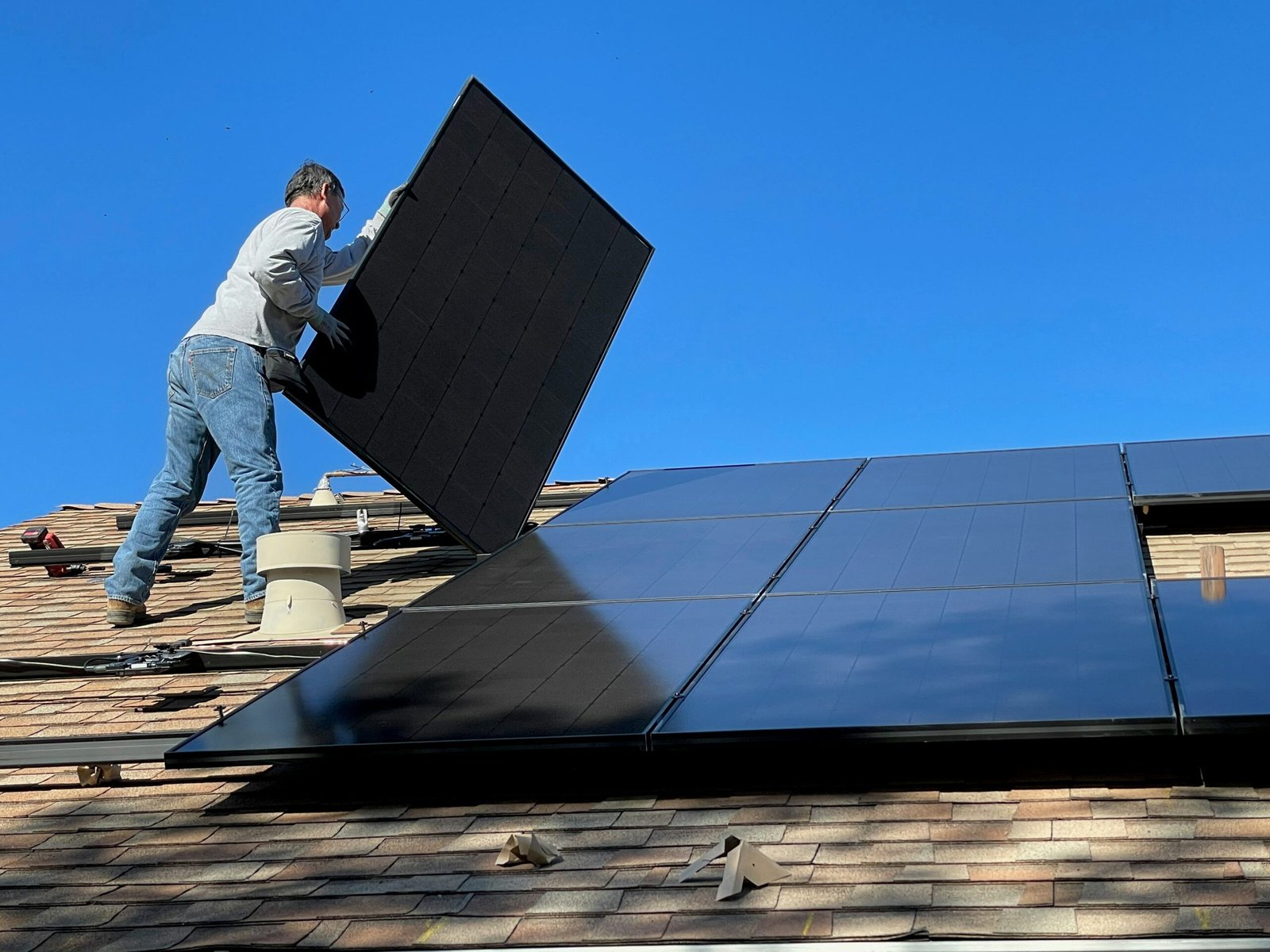
Introduction to Solar Panels
Solar panels are a crucial component in the transition toward renewable energy sources, utilizing the sun’s power to generate electricity. As concerns regarding climate change and fossil fuel dependency intensify, the adoption of solar energy has gained momentum across the globe, becoming a viable alternative for both residential and commercial applications. Solar panels function by converting sunlight directly into electricity through the photovoltaic effect, offering a sustainable and environmentally friendly energy solution.
The significance of solar panels lies not just in their ability to lower electricity costs but also in their potential to reduce carbon footprints. With increasingly stringent environmental regulations and growing awareness of the importance of sustainability, more homeowners and businesses are turning to solar energy as a means of combating climate change. The efficiency and effectiveness of solar power systems have improved remarkably over recent years, making solar panels a more attractive option for energy generation than ever before.
With the rising popularity of solar energy, it becomes essential to understand the different types of solar panels available. Each variety possesses unique characteristics, benefits, and drawbacks that may influence their suitability for specific needs. By distinguishing among these types, consumers can make informed decisions that align with their energy requirements and financial considerations. This understanding not only empowers individuals to optimize their energy consumption but also encourages broader participation in the global shift toward sustainable energy practices.
In the sections that follow, we will delve into the various types of solar panels, providing clarity on their distinct features and helping readers make educated choices when considering solar energy solutions.
Monocrystalline Solar Panels
Monocrystalline solar panels are a leading technology in the photovoltaic landscape, celebrated for their efficiency and sleek design. These panels are composed of single-crystal silicon, which is created through a meticulous process involving the crystallization of silicon. This method results in uniform cells that facilitate increased energy production. As a result, monocrystalline solar panels typically achieve efficiency ratings exceeding 20%, often reaching up to 25%, making them a highly effective choice for solar energy conversion.
One of the most notable advantages of monocrystalline panels is their longevity. With proper installation and maintenance, they can offer a lifespan of 25 years or more, providing a reliable energy source and returning significant investment over time. Their high power output allows for more energy generation from a smaller surface area, which is particularly beneficial in space-constrained scenarios, such as urban environments or residential rooftops. Moreover, their aesthetic appeal, characterized by a sleek, black appearance, often blends better with many architectural styles, adding to their desirability among homeowners.
However, it is essential to address the cost implications associated with monocrystalline solar panels. While their efficiency and durability present compelling advantages, these panels are typically more expensive to manufacture compared to their polycrystalline counterparts. This higher initial investment may deter some consumers, particularly those with budget constraints. Despite this, many users find that the savings on energy bills and potential incentives offset the upfront costs over time.
In summary, monocrystalline solar panels represent a prime choice for those seeking a high-performance solar solution, offering impressive efficiency, aesthetic considerations, and long-term benefits. However, potential buyers should weigh these advantages against the higher initial costs when considering their solar energy options.
Polycrystalline Solar Panels
Polycrystalline solar panels represent a significant segment of the solar energy market, distinguished by their unique manufacturing process and characteristics. These panels are produced by melting multiple silicon crystals together, which forms a composite of various crystal structures in each individual cell. This method often results in a mosaic-like appearance, giving them a distinct visual aspect compared to their monocrystalline counterparts, which are made from single silicon crystals.
When considering efficiency, polycrystalline panels typically exhibit lower performance rates than monocrystalline options. Typically, polycrystalline solar panels achieve efficiency ratings ranging from 15% to 20%, which is slightly less than the higher efficiencies that monocrystalline panels can achieve. As a result, polycrystalline panels may require more space to produce the same amount of energy, making them less ideal for areas with limited installation room. However, the trade-off for this lower efficiency is often found in their cost-effectiveness. Polycrystalline panels are generally less expensive to produce and purchase, which makes them an attractive option for many homeowners and businesses seeking to adopt solar energy without incurring excessive costs.
Moreover, the performance of polycrystalline solar panels can be influenced by environmental conditions, particularly at higher temperatures. While they tend to underperform slightly compared to monocrystalline panels under elevated temperatures, they are still a viable choice for numerous climates. Their robust performance in moderate conditions can be favorable for installations in regions where high heat is not a dominant factor. Overall, polycrystalline solar panels offer a balance of affordability, reasonable efficiency, and adaptability, making them an important option in the broader landscape of solar energy solutions.
Thin-Film Solar Panels
Thin-film solar panels represent a significant innovation in photovoltaic technology. Unlike traditional crystalline solar panels, which are rigid and heavier, thin-film panels are created by depositing photovoltaic materials onto flexible substrates. This unique manufacturing process allows them to be lightweight, versatile, and easily integrated into various applications. Thin-film technology commonly utilizes materials such as cadmium telluride (CdTe), amorphous silicon (a-Si), or copper indium gallium selenide (CIGS), each offering distinct characteristics and benefits.
While thin-film solar panels tend to have lower efficiency ratings compared to their crystalline counterparts, they demonstrate superior performance in low-light conditions. This feature makes them particularly suitable for environments with less direct sunlight, where traditional panels might struggle to generate sufficient energy. Additionally, their flexibility allows for installation on unconventional surfaces where rigid panels cannot be mounted, such as curved roofs or building-integrated photovoltaics.
From a cost perspective, thin-film solar panels present an advantageous solution. The lower production costs stem from a reduced material requirement and simplified manufacturing processes, which can make them more accessible for certain consumers and projects. For large-scale installations, such as solar farms, these economic factors can contribute significantly to overall project viability.
In comparing thin-film panels to crystalline options, it is important to consider the environmental impact as well. The production of crystalline panels typically involves more energy-intensive processes and higher amounts of raw materials, compared to the leaner production of thin-film panels. As a result, thin-film technology can be seen as a more sustainable choice in many situations, allowing for a more environmentally considerate approach to harnessing solar energy.